
Music Theory, Solfège, Developing Aural Skills” was written in order to present a multifaceted and comprehensive teaching method that connects music theory with the act of making music. The aim of the book is not only to provide the students with theoretical knowledge, but also to help them apply this knowledge in practice when learning to play a musical instrument or participating in a choir, orchestra, or other musical ensemble. By offering interesting music material to educators, the book aims to create an engaging learning environment, thus activating the conscious participation of the students and promoting the development of their musical skills.
The steps that are followed are:
- presentation of a musical phenomenon (theoretical approach)
- how it sounds (using exercises and representative examples of well-known music)
- how to sing it (rhythmic and melodic solfège exercises)
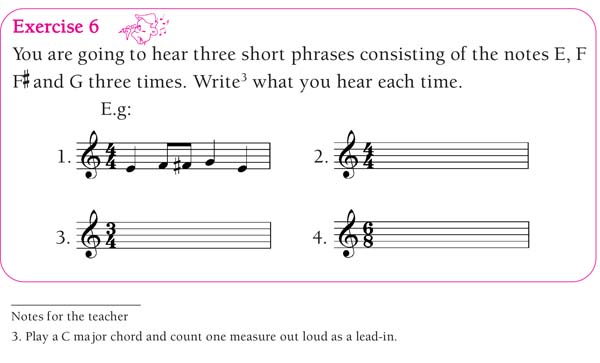
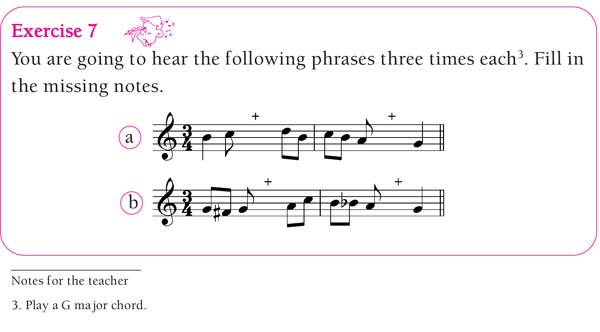
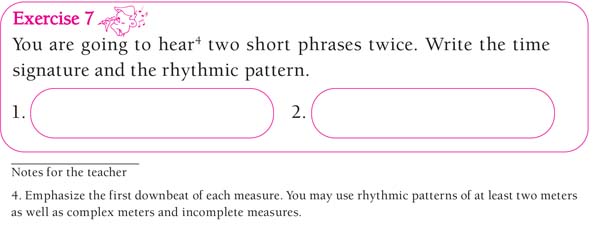
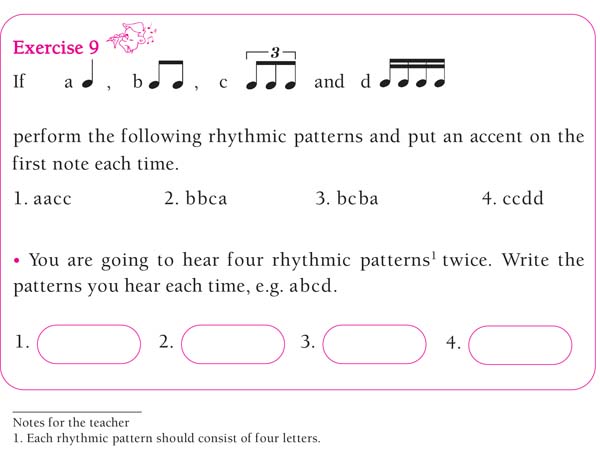
- aural recognition (using ear training and dictée exercises)
The solfège exercises in this book are original compositions with piano accompaniment in various styles, such as ragtime, swing, etc. The audio files include recordings of the piano accompaniment in all the keys required, in two versions: a) the melody with the accompaniment and b) only the accompaniment. They also include excerpts from the music examples in the Student’s Book. The recordings help make the activities enjoyable for the student when studying alone. By connecting the theory of music to music as an Art, they will help develop the musicality of the student.
This book is accompanied by a Teacher’s Book, which contains the piano accompaniment for the solfège exercises.
In addition to the Music Theory and Solfège course, the book is often used in the following courses:
- musical instrument (piano, violin, flute, etc.)
- choir
- sight singing
- preparation for entry exams for Music Departments at universities
The solfege exercises (in combination with the score from the teacher’s book) may also prove useful as a repository of exercises for the teaching of musical instruments or in a choir.
This book is appropriate for use in music schools, private schools, music departments, choirs, marching bands, etc. and is suitable for students aged 9 years old onwards.
The aim of this book is to create an engaging environment where
learning music can be interesting and fun. Therefore, each aspect of music is approached according to how we listen to and perceive music. For this reason I have used examples from the classical, contemporary and traditional repertoire.
By using
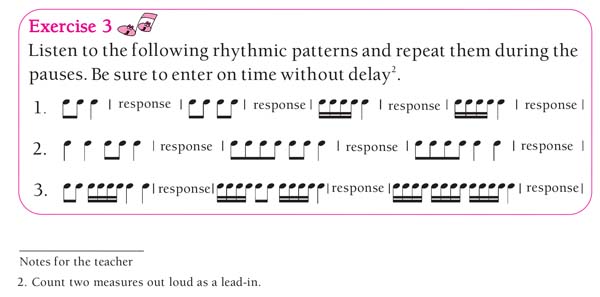
– ear training exercises
– exercises to identify similar rhythmic or melodic motifs
– divided attention exercises
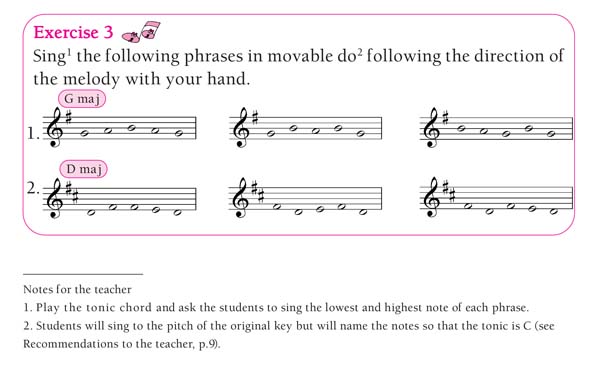
– movable do exercises
– transposition exercises
– solfège exercises that are sung in both major and minor modes
– two-part and three-part ear training exercises
the student can develop the ability to recognise different intervals, internalise the names of the pitches, develop a sense of major and minor, learn to transpose, get the feel of the tonal centre, develop rhythmic accuracy and improve their memory. Furthermore, the teacher can save valuable time, since the exercises are already written out.
An introduction to basic concepts of harmony, like chord inversions, cadences, chord sequences and modulations, is given in the third volume of the book.
Developing the ear and learning to discern the different musical phenomena are useful skills for someone learning to play a musical instrument, participating in musical ensembles, orchestras, choirs, marching bands, etc. These skills are particularly useful for students preparing for entry exams for Music Departments at universities. These exams invariably include an ear training test.
Solfège exercises are marked with a

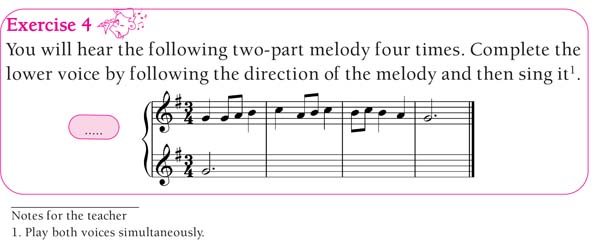
Ear training exercises are marked with a
Sight singing and imitation exercises are marked with a

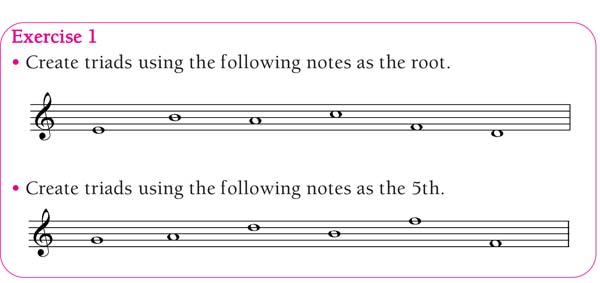
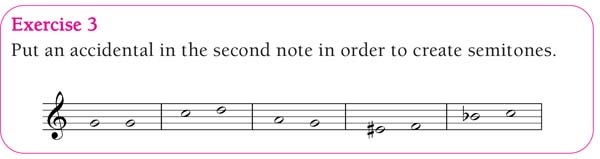
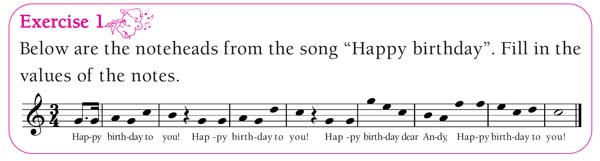
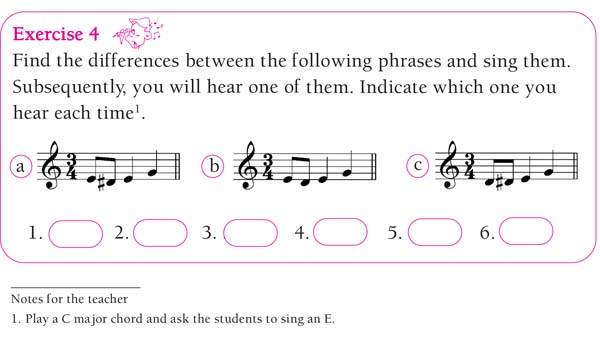
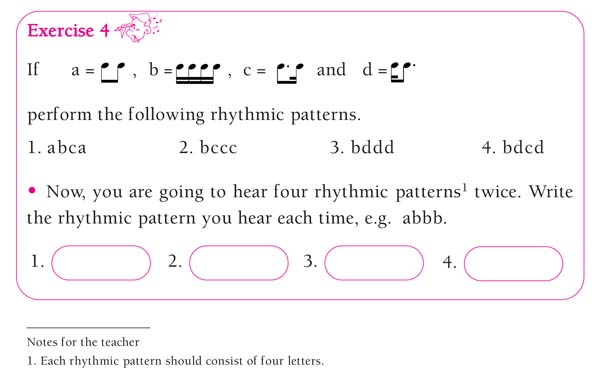
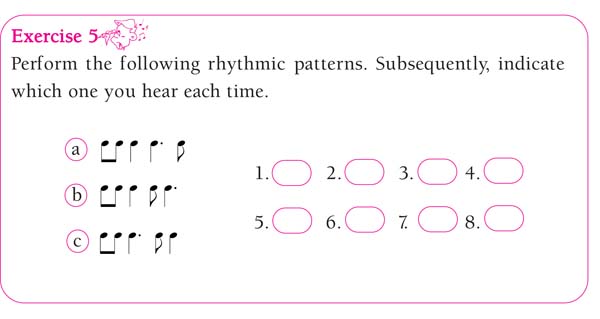
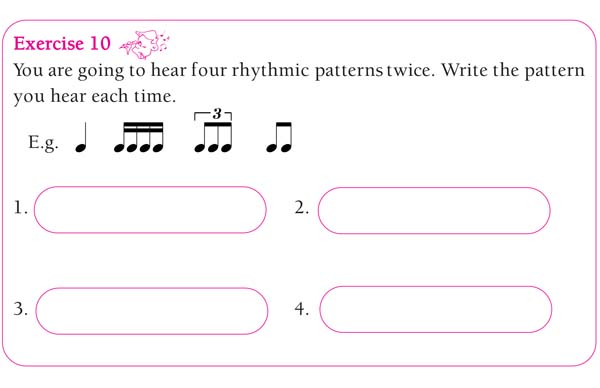
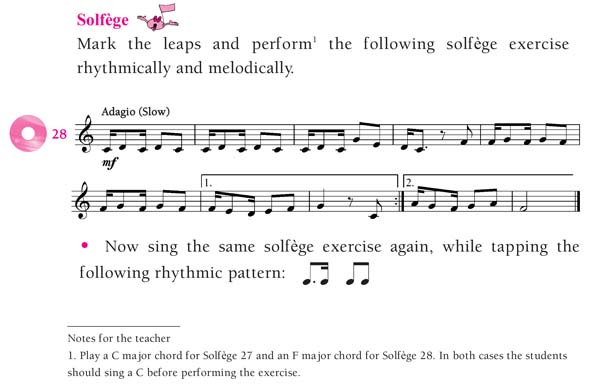
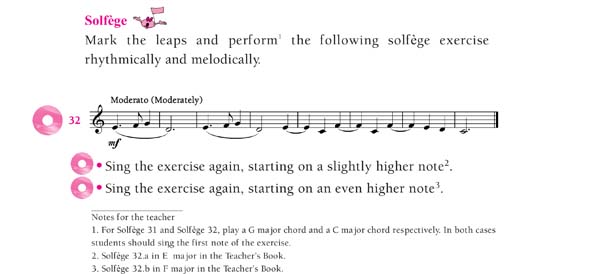
The large number of solfège exercises in this book aims not only to develop the student’s sight-singing ability, but also their musicality and to link the theory of music to music as an art form.
The solfège exercises in this book are original compositions with piano accompaniment in various styles, such as ragtime, swing, etc. with musical interest, leading away from the clasical character of an “exercise”.
The recordings help make the activities enjoyable for the student when studying alone. By connecting the theory of music to music as an Art, they will help develop the musicality of the student.
 The CD symbol refers to audio files for:
the solfège, where A refers to an audio file with both the melody and the accompaniment played on a piano, while B refers to an audio file with only the piano accompaniment.
music examples from the classical or traditional music repertoire.
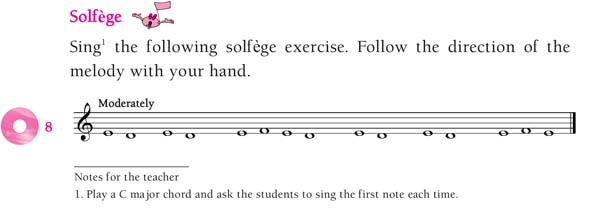
Solfège 8 – Βοοκ 1 (with no values - time signature)
Listen to the examples
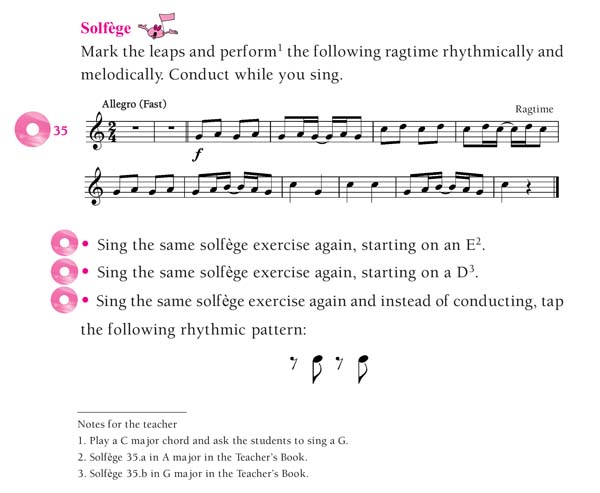
Solfège 35 – Βοοκ 1 (Ragtime with transposition)
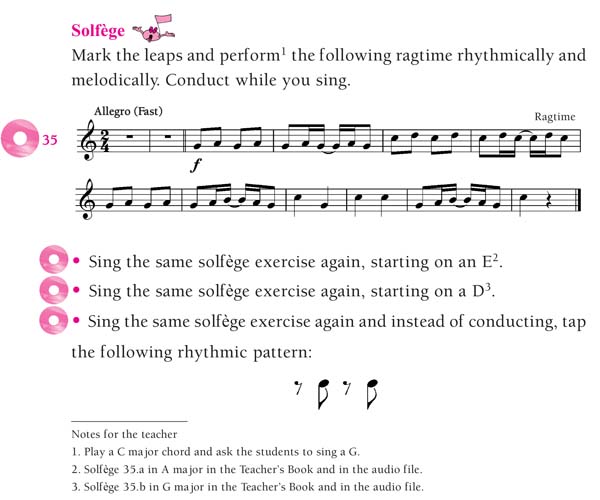
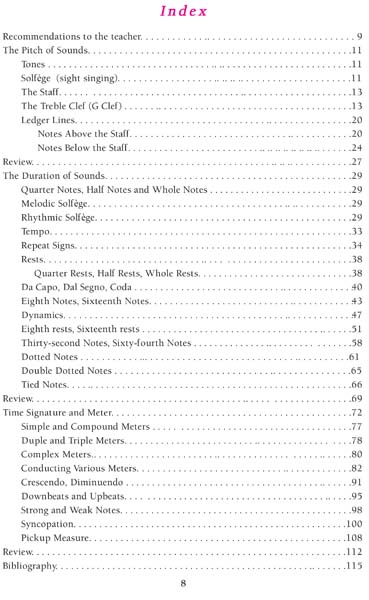
Book 1 contains three main chapters:
– The Pitch of Sounds
– The Duration of Sounds
– Time Signature and Meter
as well as some additional topics of musical notation, such as repeat signs, dynamics, etc.
Index of Book 1
Look inside
Book 2 contains four main chapters:
– Whole Tones
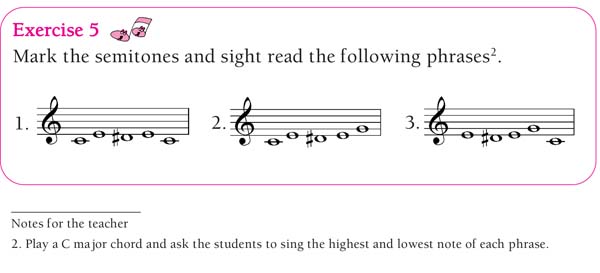
– Semitones
– Scales (Major – introduction to minor)
– Major and minor chords
– Intervals
– Triplets
as well as some additional topics of musical notation, such as the bass clef, degrees, transposition etc.
Also, in Book 2, the two-part song – solfège is introduced.
Index of Book 2
Look inside
Book 3 contains the following main chapters:
– Minor Scales
– Chord Inversions
– Rhythms – Dances from various countries – Types of Music
– Quintuplets
– Duplets etc.
– Seventh Chord
– Augmented – Diminished Chords
as well as some additional topics of musical notation, such as
C clef, Ornaments, Chromatic, Pentatonic, Whole Tone Scales, Transposition, Variations etc.
Also, in Book 3, Chord Identification is introduced.
Index of Book 3
Look inside
Coming soon.